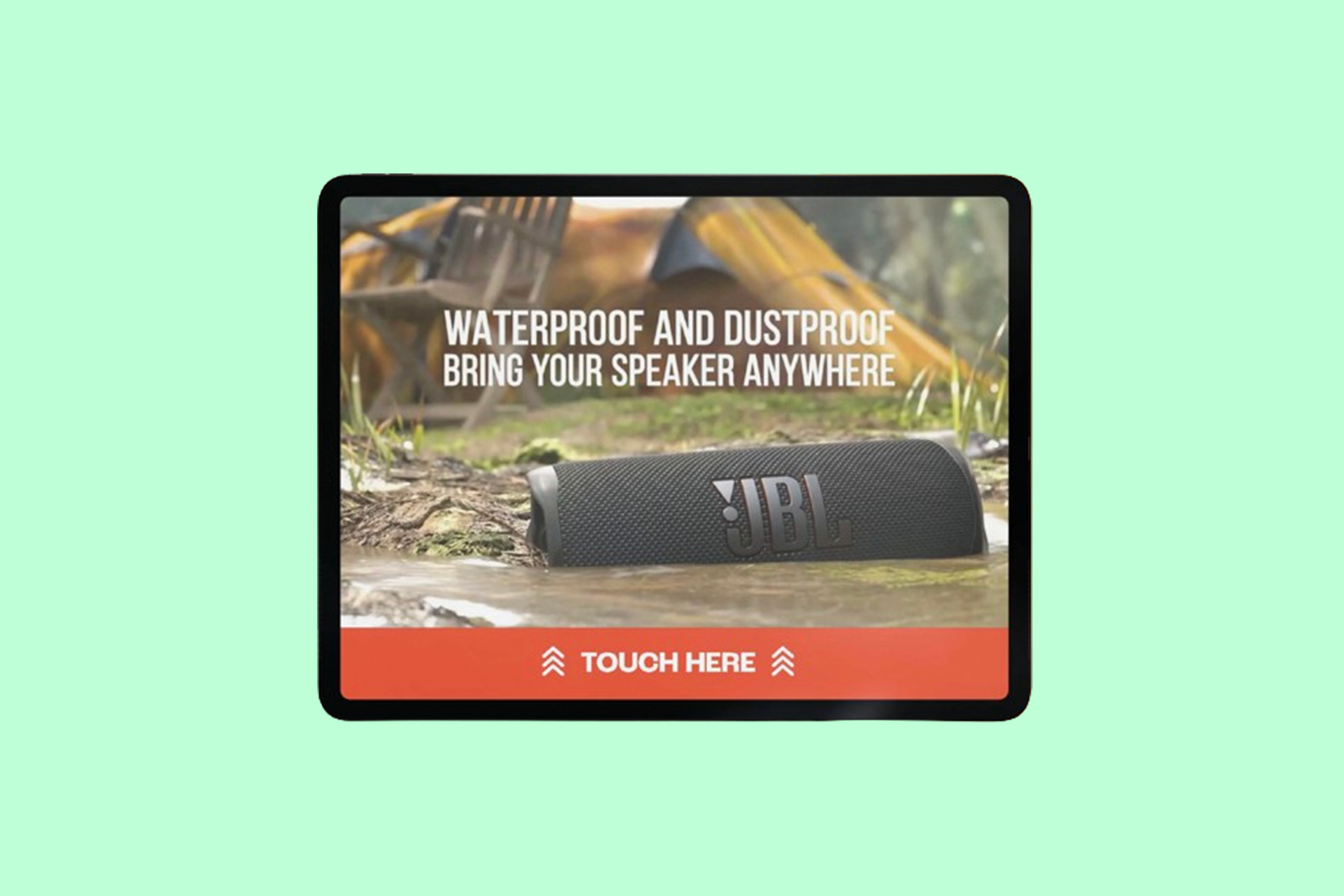
The JBL Digital Display project focused on creating an interactive in-store experience that would help customers explore, compare, and understand JBL speakers before making a purchase. Designed for large electronics retailers such as MediaMarkt and Coolblue, the display combined product information, audio controls, comparison tools, and interactive content in one accessible interface. The experience was supported by an analytics dashboard and a setup wizard for store employees. As the product designer, I contributed to the research, information architecture, interaction design, wireframing, interface design, prototyping, and definition of the final user flows. I collaborated with the project team and stakeholders to translate business requirements into a consistent and engaging customer experience. The main motivation was to transform a traditional product display into an interactive tool that could improve product understanding, strengthen engagement with the JBL brand, and support purchasing decisions.
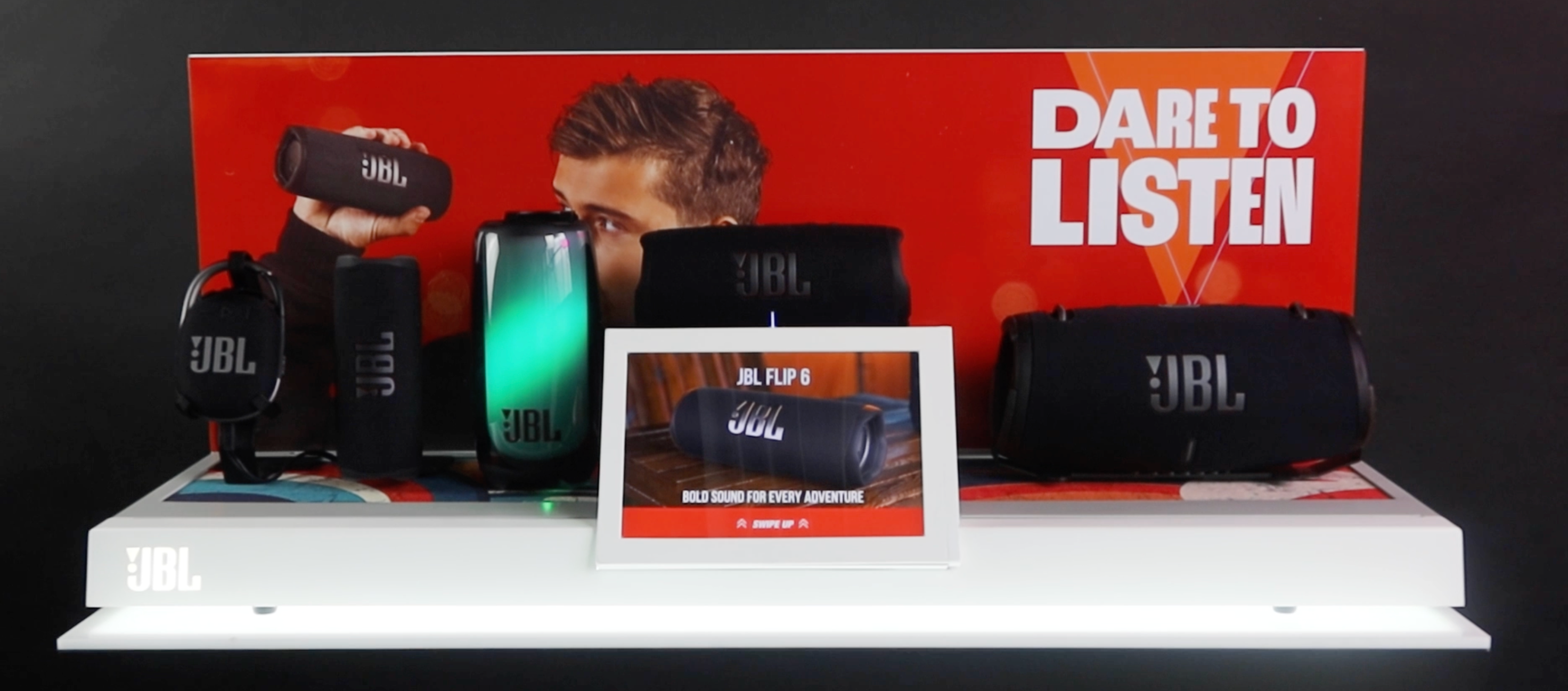
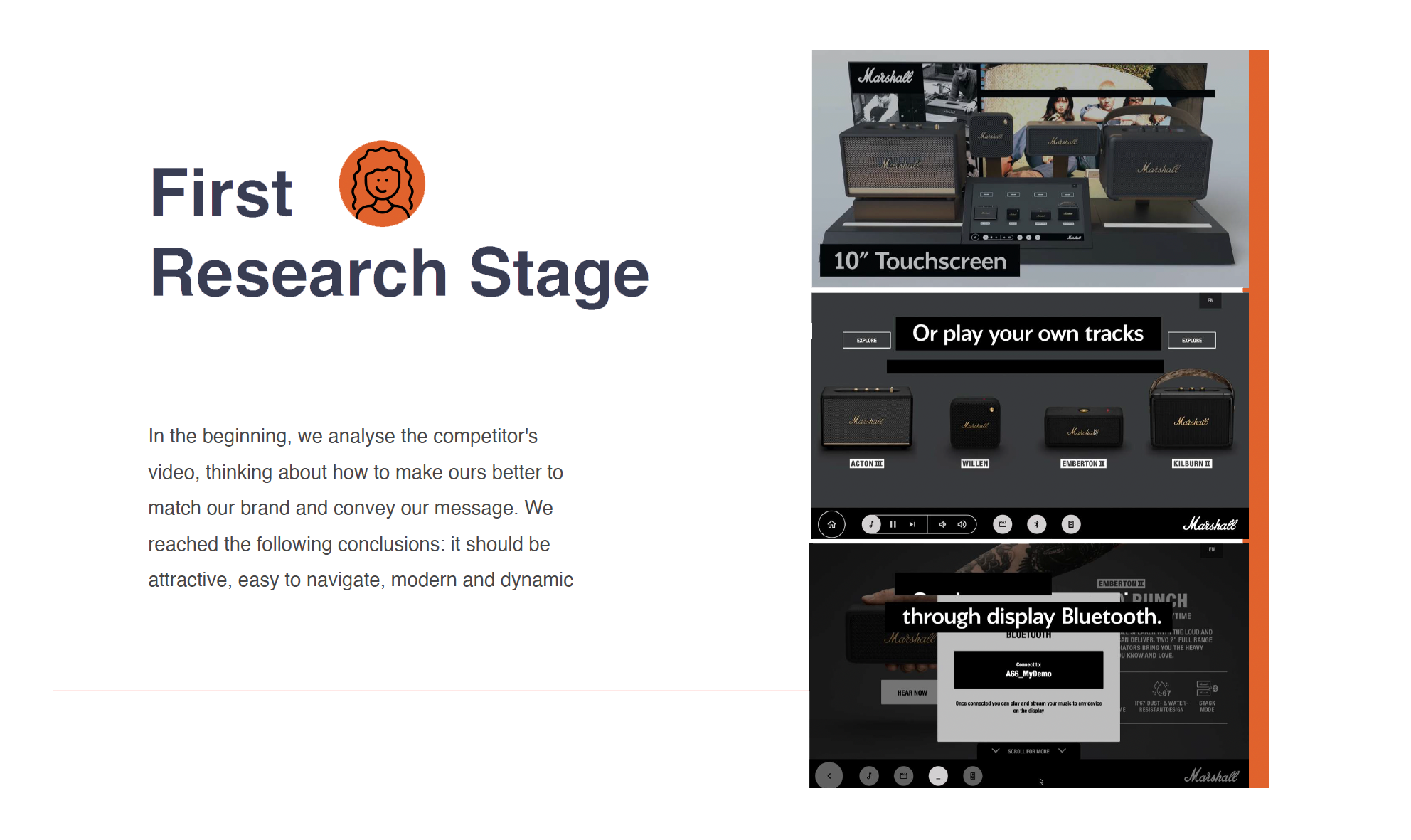
The project began as part of a tender, with the challenge of developing the first interactive display concept within one month. The client provided a competitor’s video as a reference and expected a comparable experience adapted to JBL’s identity and product portfolio. However, the challenge was not simply to reproduce an existing solution. The interface needed to accommodate several speaker models, product specifications, comparison options, music controls, and promotional content without overwhelming the user. We also had to consider two different user groups. Customers needed a simple and engaging way to explore the products, while store employees required an efficient process for configuring each display and connecting it to the central analytics system. The main design question became: How might we create an intuitive in-store experience that helps customers understand and compare JBL speakers while also supporting the commercial and operational needs of retailers?

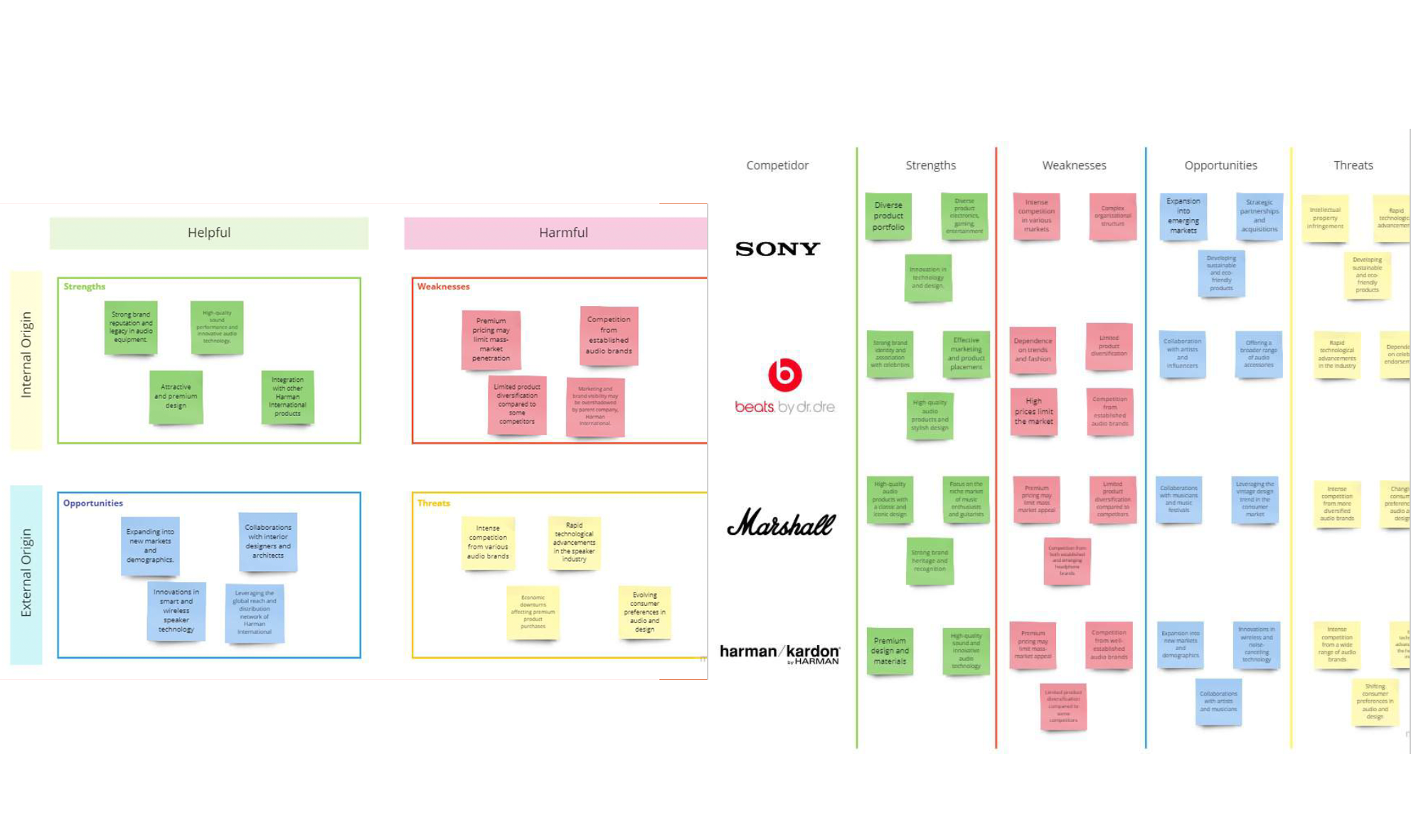
In the initial phase, various methodologies were employed to gain a comprehensive understanding of the target area. Among these methodologies, SWOT analysis from competitor analysis played a pivotal role. This approach is essential in research as it helps identify strengths, weaknesses, opportunities, and threats, thus providing valuable insights for strategic decision-making, product development, and competitive positioning.
Conducting a SWOT analysis specifically for an interactive JBL display is imperative. This analysis enables leveraging strengths, addressing weaknesses, exploring opportunities, and mitigating threats, all crucial aspects for designing and implementing a successful display. The ultimate goal of the JBL user display is to offer a user-friendly interface and an engaging experience for customers to explore and learn about JBL speakers, thereby fostering brand engagement and driving sales.
With this, a phrase was created to guide the project: The JBL user display needs to provide a user-friendly interface and an engaging experience for customers to learn about JBL speakers, driving brand engagement and sales.
What the interactive display needed
- List to compare the products that are on display
- 360 view of the products
- Discovery of the background
- Show different colors
- Possibility of changing music
- Possibility of connecting 4 speakers at the same time
- Connect via Bluetooth
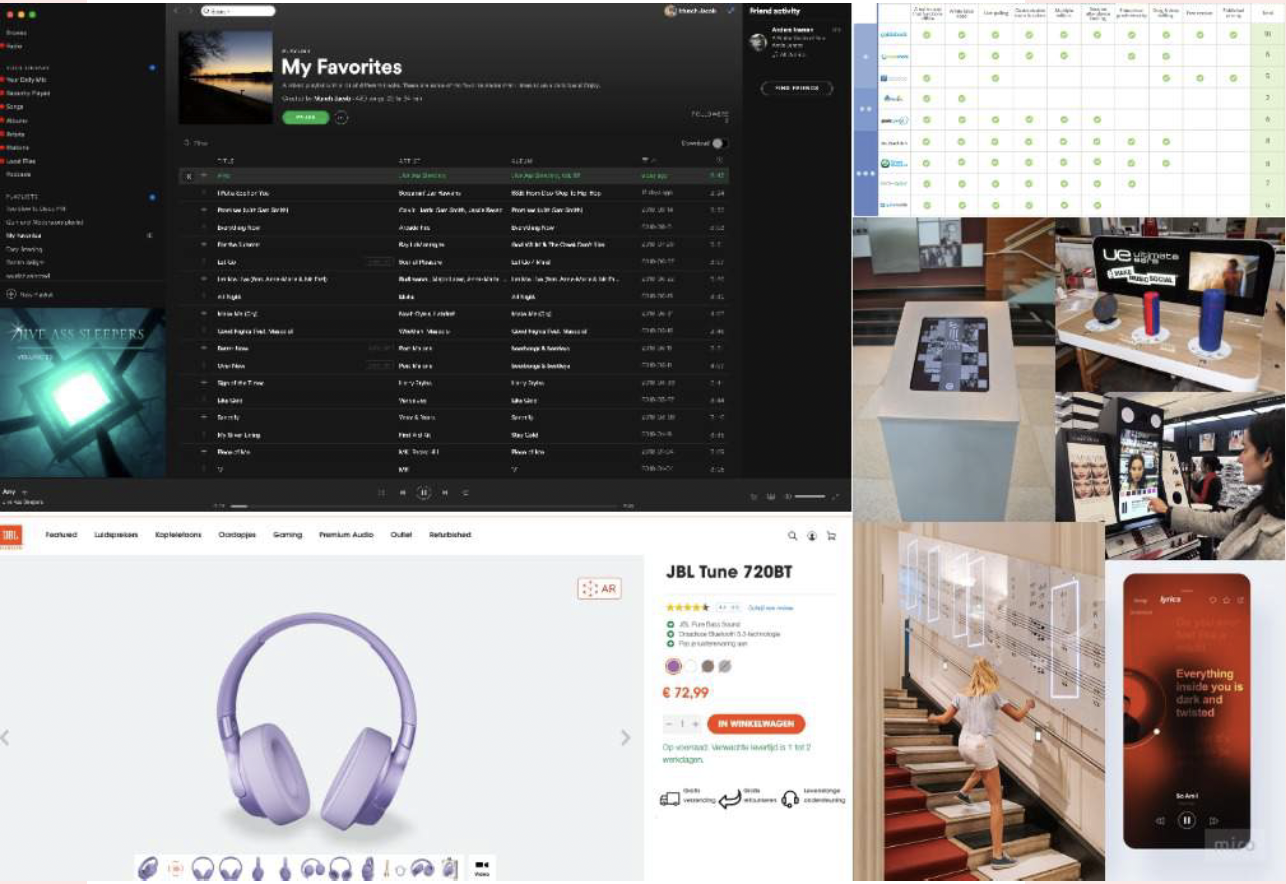
Crafting the initial drafts for a layout is consistently a challenging endeavor, requiring a systematic approach to ensure the final design meets both functional and aesthetic requirements. For this particular project, I followed a structured methodology, beginning with the creation of wireframes as a foundation for the layout. These wireframes provided a skeletal structure, outlining the placement of key elements and functionalities within the display.
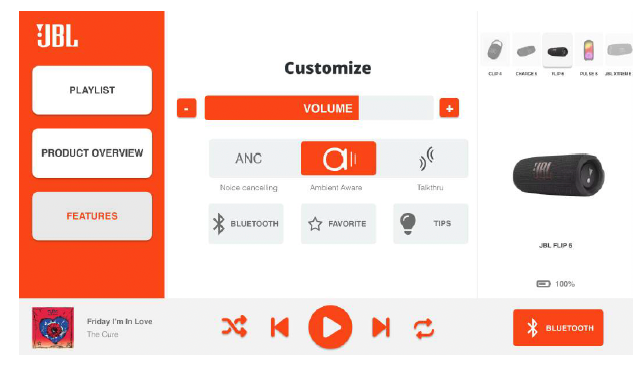
As the design process progressed, refining the final buttons became a focal point to achieve an optimal user experience. This involved meticulous attention to detail, considering factors such as size, placement, and visual hierarchy to enhance usability and accessibility.
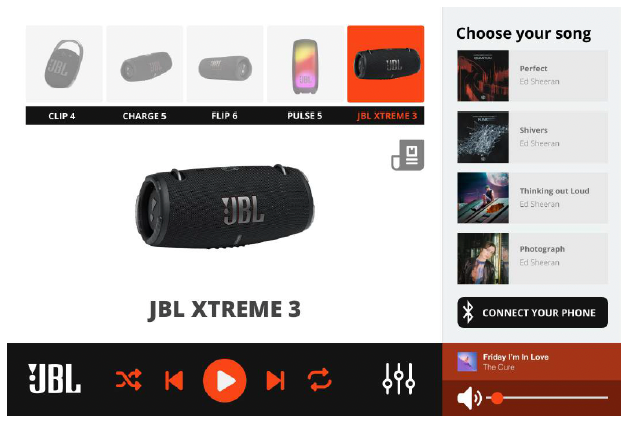
Incorporating JBL's identity was a central aspect throughout the development process. Ensuring brand consistency was paramount, as the display serves as a representation of the JBL brand to potential customers. By incorporating elements such as the JBL logo, color palette, and typography consistent with the brand guidelines, the display maintains a cohesive and recognizable identity.
Furthermore, the inclusion of features such as a music bar, modern layout, and easy navigation was instrumental in making the platform inviting and user-friendly. The music bar not only adds visual appeal but also reinforces JBL's association with audio excellence, creating an immersive experience for users. The modern layout enhances the aesthetic appeal of the display, presenting information in a clear and organized manner. Easy navigation ensures that users can seamlessly explore the various features and products showcased within the display, facilitating a positive user experience.
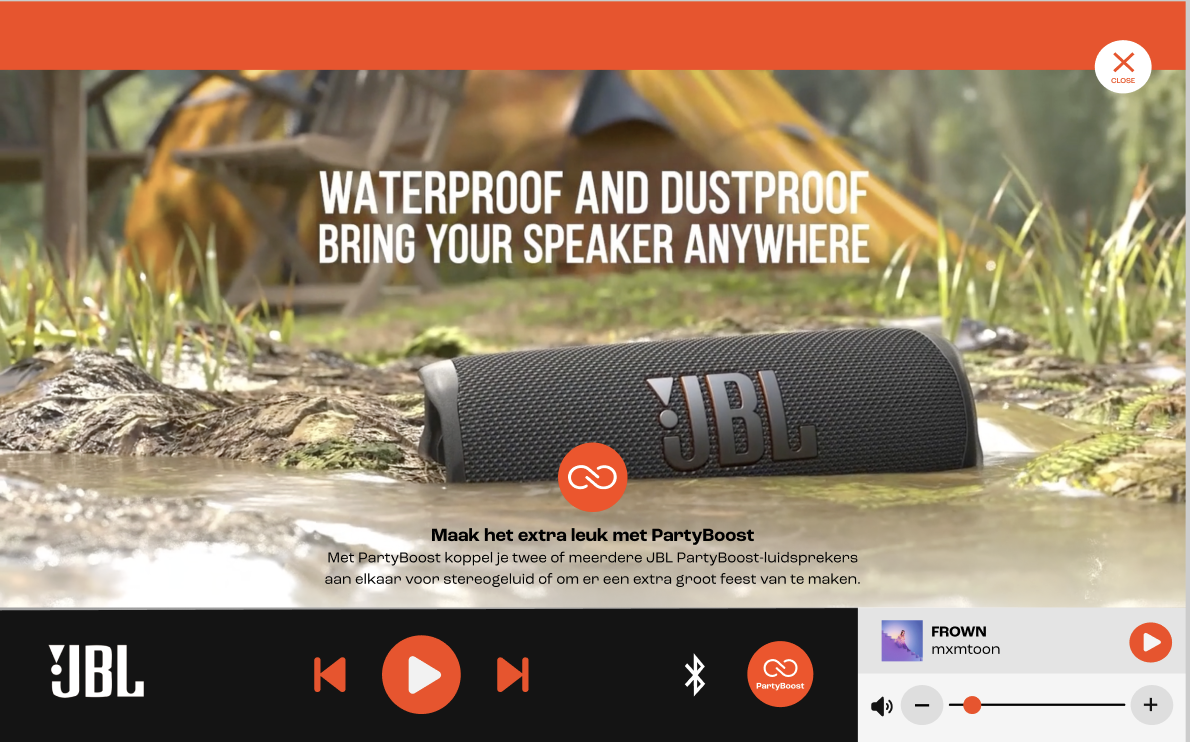
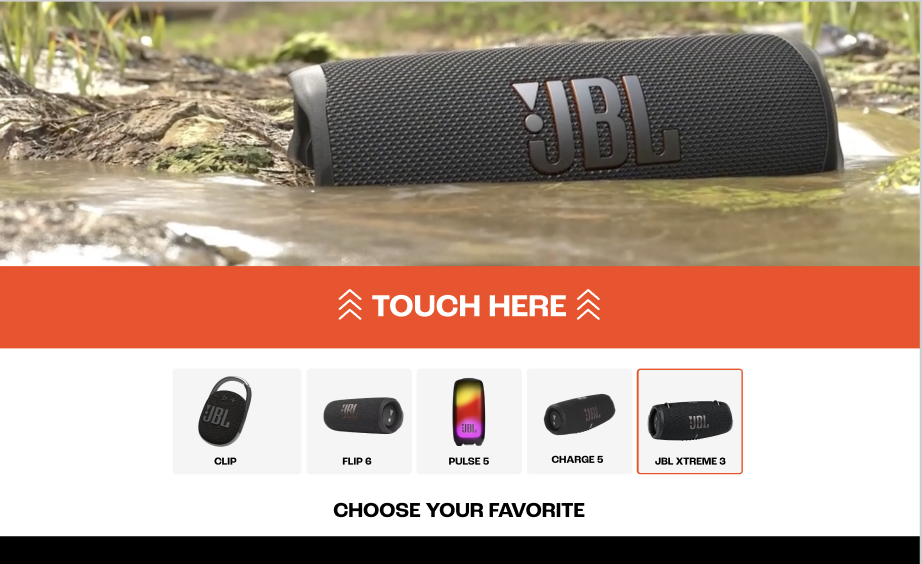
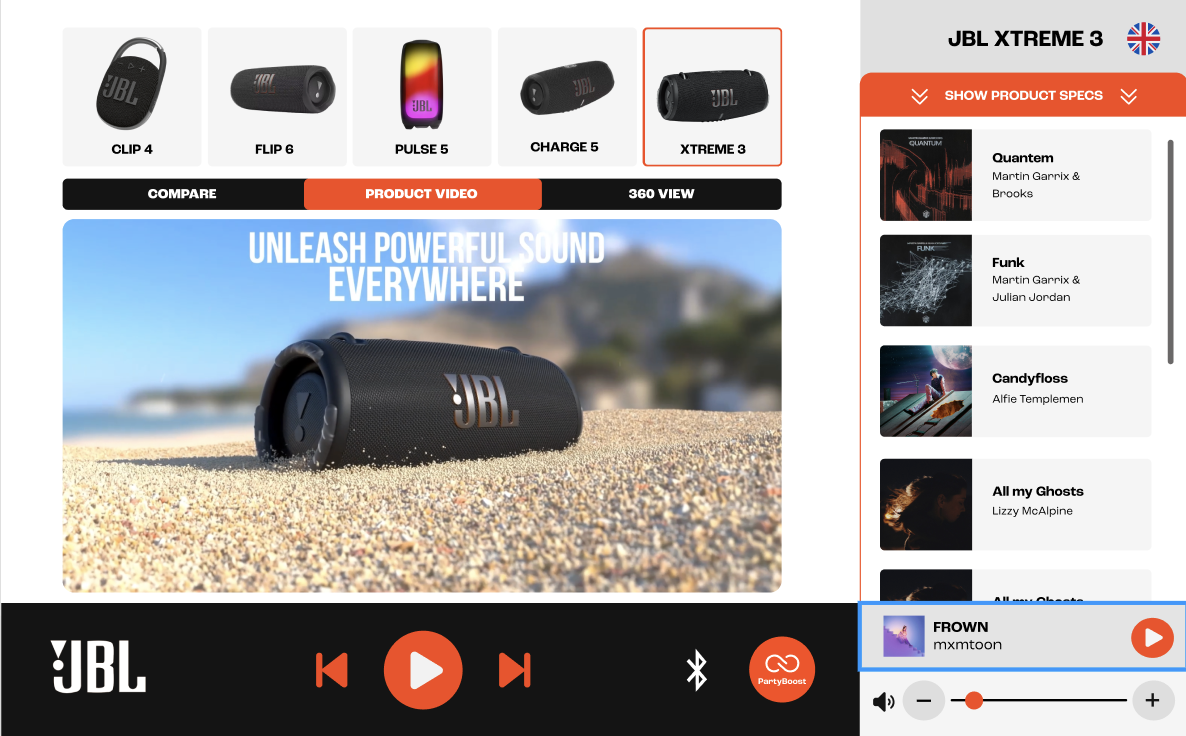
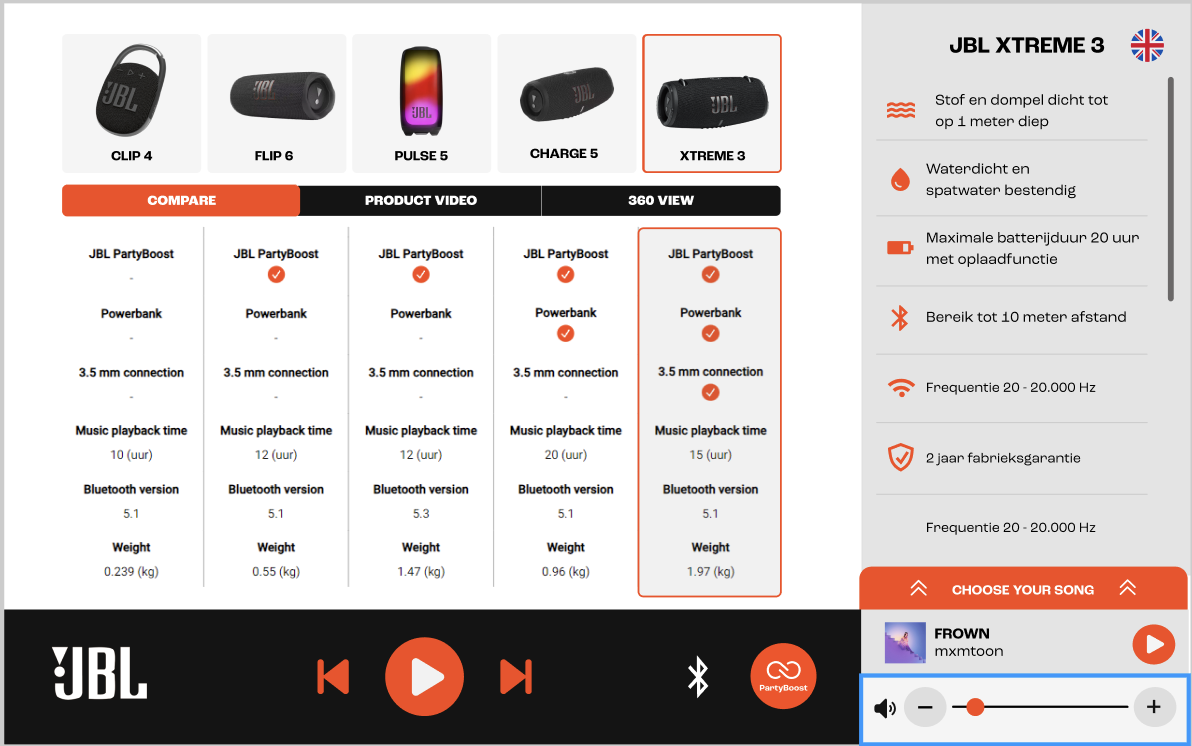
Throughout the development of the final layouts, collaboration and iteration played crucial roles. Feedback from stakeholders and usability testing informed refinements and adjustments to ensure that the final design met the project objectives effectively.
In conclusion, crafting the initial drafts and developing the final layouts for the JBL display involved a systematic approach, meticulous attention to detail, and a focus on maintaining brand consistency and enhancing user experience. The result is a visually appealing, user-friendly platform that effectively showcases JBL's products and reinforces the brand's identity to potential customers.
Final result of the digital display
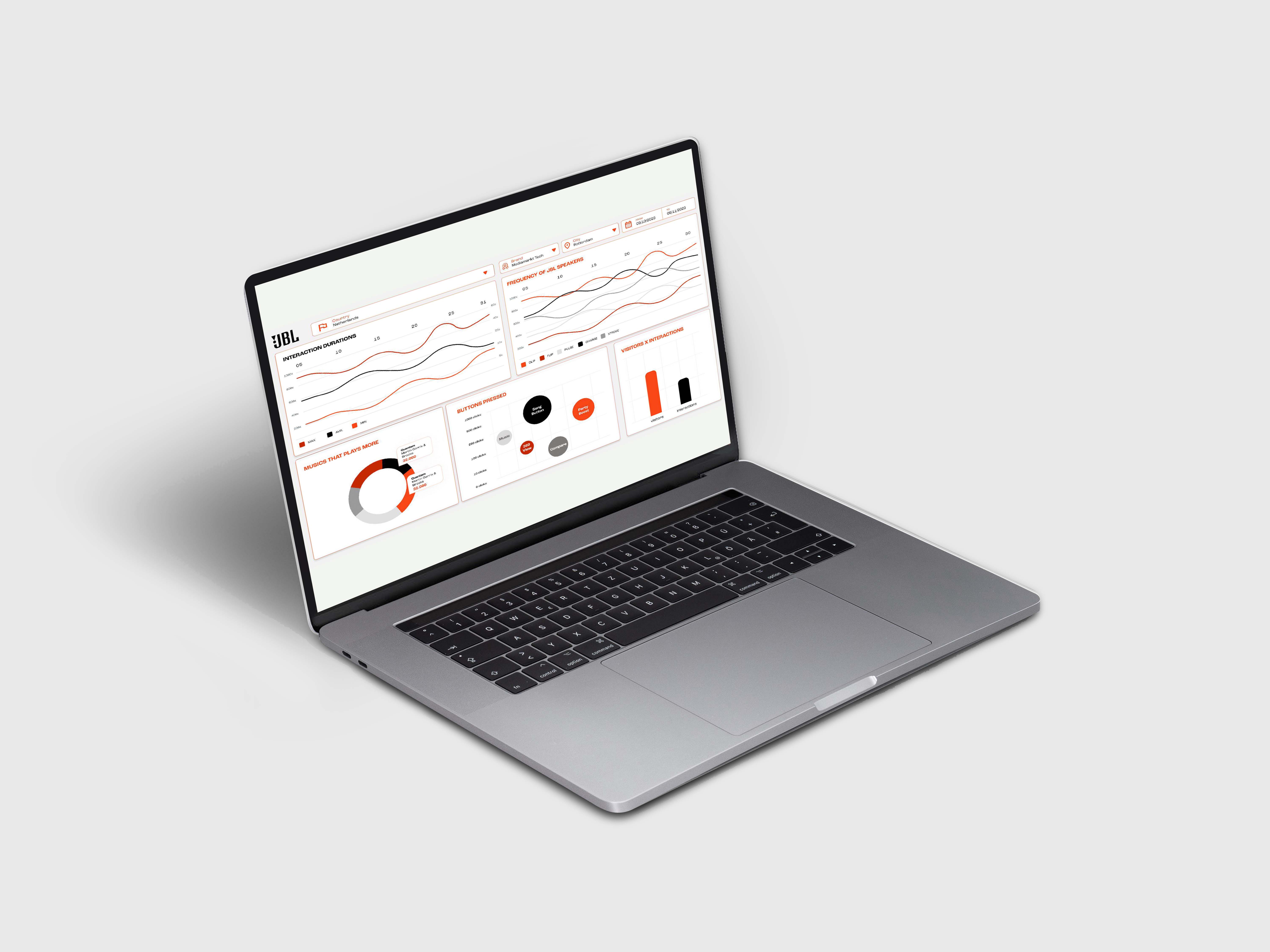
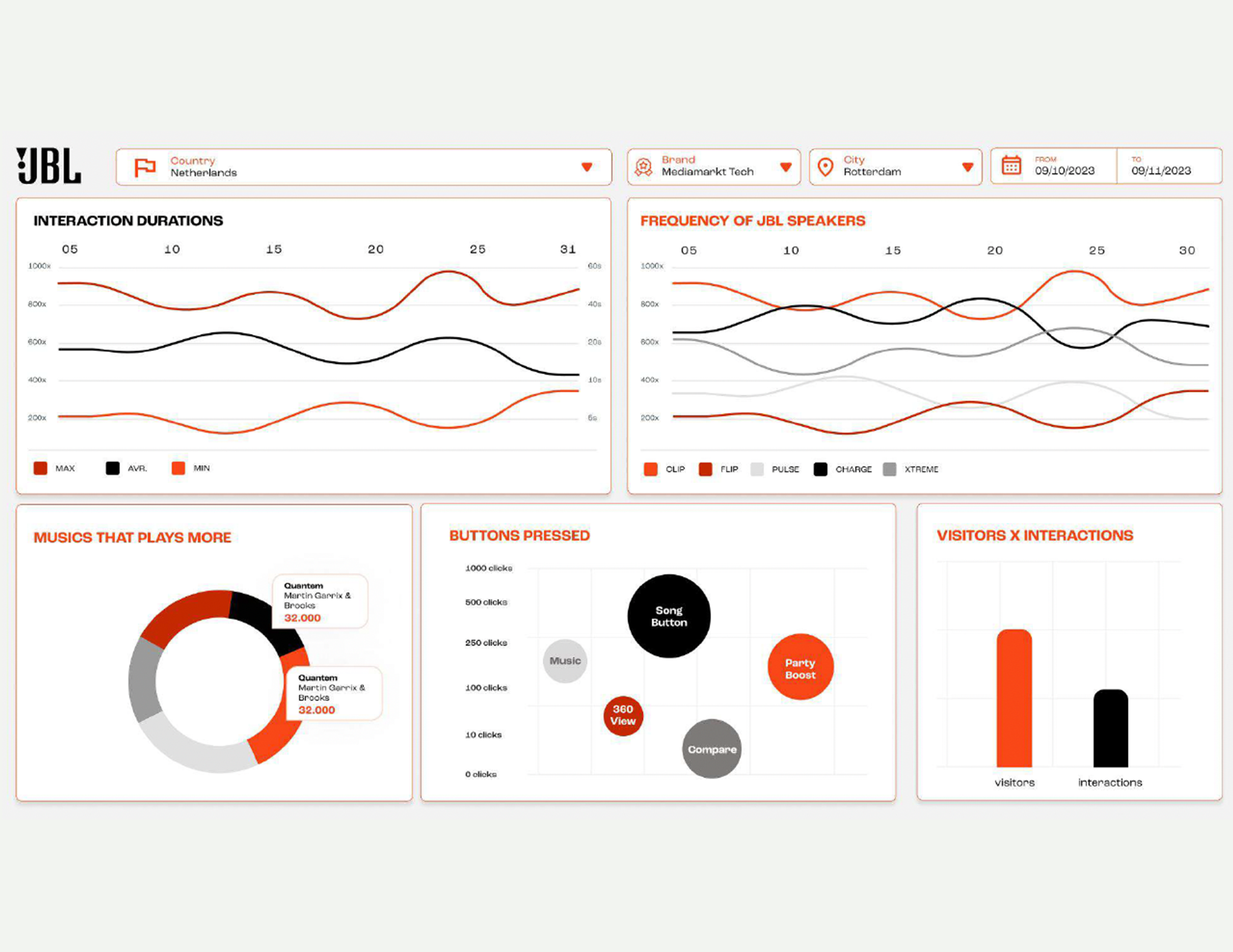
In tandem with the development of the interactive platform, a sophisticated dashboard was meticulously crafted to provide invaluable insights into user interactions. This dashboard serves as a dynamic tool, offering comprehensive analytics on various metrics such as popular songs, interaction duration, and frequently pressed buttons, among others. By tracking and analyzing these data points, the dashboard empowers stakeholders to gain a deeper understanding of user behavior and preferences, enabling informed decision-making and continuous optimization of the interactive experience. This robust analytical tool not only enhances the effectiveness of the platform but also underscores our commitment to delivering a seamlessly immersive and user-centric experience for our audience.
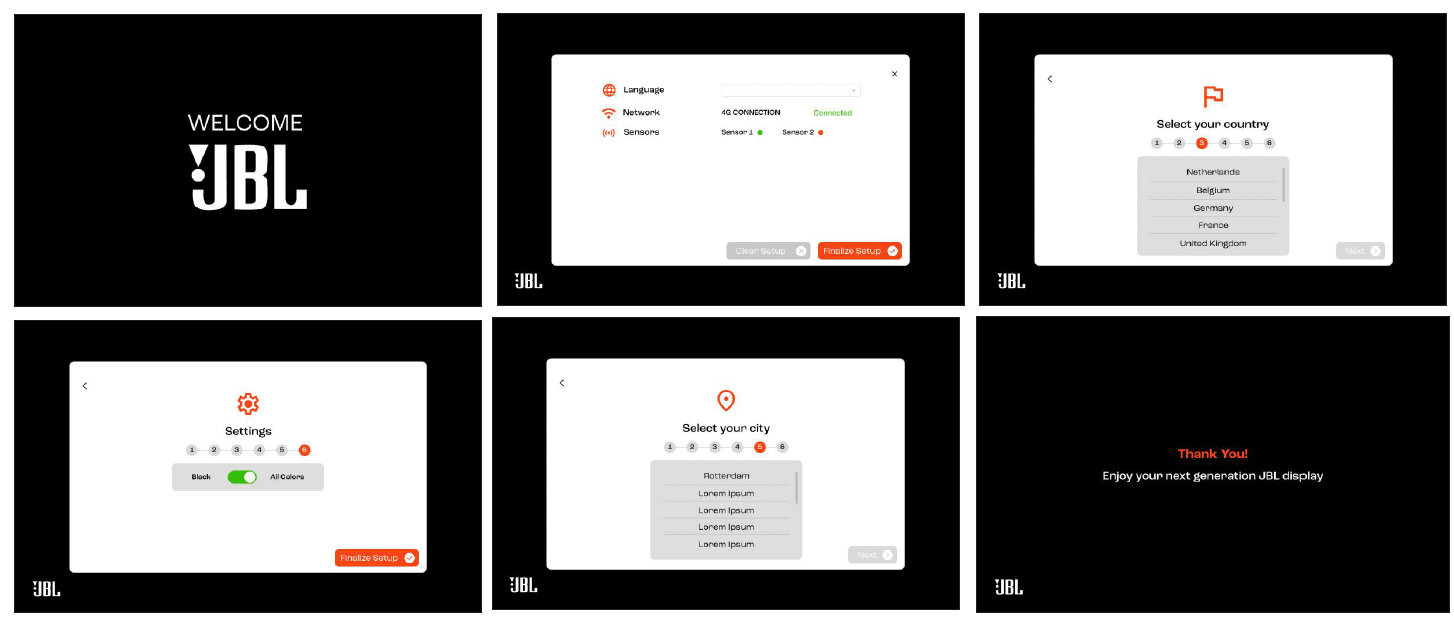
To support the rollout of JBL interactive displays across multiple retail locations, I designed a simple and intuitive setup wizard for store employees. The wizard guides users through each step of the configuration process, ensuring accurate data entry and a smooth onboarding experience. By simplifying complex setup tasks into clear, manageable steps, the solution reduced errors, improved efficiency, and enabled seamless synchronization with the central analytics dashboard.
To deliver a functional concept within the limited project timeline, I worked with the team to define a minimum viable product based on the most important customer and business needs.
The customer-facing MVP included:
The operational MVP also included a setup wizard to guide store employees through the configuration process. The wizard used a step-by-step flow for entering information such as country, city, store, display settings, and sensor configuration. This reduced the risk of incorrect data entry and ensured that information could be transmitted consistently to the central dashboard.
Lower-priority features were documented for future iterations rather than added to the first release. This helped the team maintain a clear scope and concentrate on delivering a coherent and testable core experience.
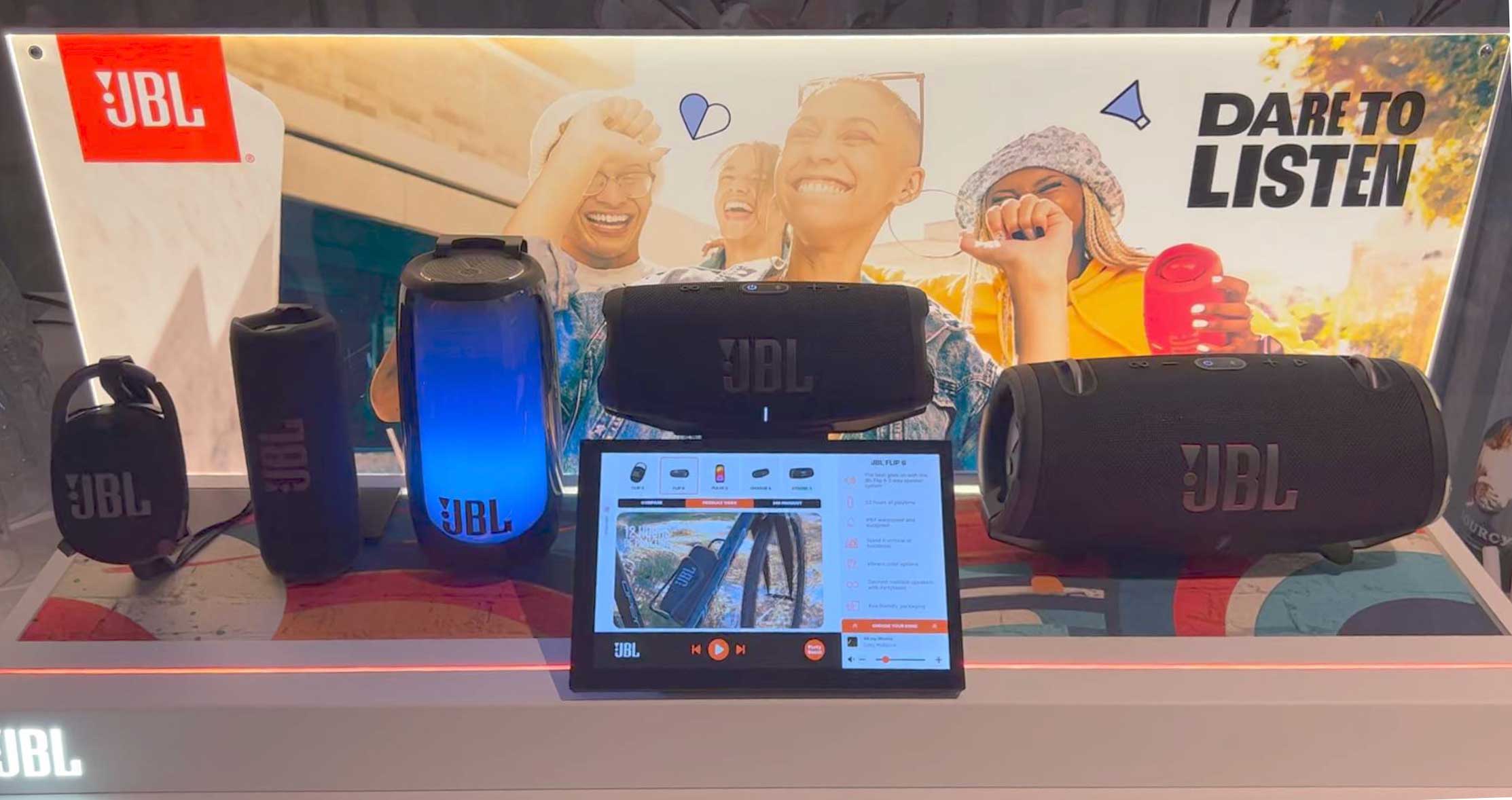
This project demonstrated the importance of designing beyond the final interface. The success of the JBL Digital Display depended on the relationship between customer interactions, store configuration, product content, and analytics.
The final concept transformed a static retail presentation into an interactive product experience that helped customers discover and compare JBL speakers. At the same time, the dashboard provided stakeholders with information about interaction duration, popular products, frequently selected features, and customer behaviour.
One of the main lessons from the project was the value of testing the complete navigation flow instead of evaluating screens individually. Decisions about hierarchy, button placement, terminology, and visual consistency became clearer when the interface was considered as part of a real customer journey.
The result was a scalable, brand-consistent, and user-friendly experience that balanced customer needs, commercial objectives, and operational requirements.
Below this section, include direct links to the interactive prototype, final demonstration video, or live implementation wherever these materials are publicly available.